
How Professional Wood Staining Protects Your Fence From Summer Damage
One of the most challenging aspects of owning a wood fence is that it rarely shows signs of weather damage until the structural harm is already done. A fence can look perfectly fine for a season or two, masking the fact that North Georgia's intense summer humidity and UV radiation are slowly drying out the wood's natural oils. When raw timber is left without an exterior barrier, water penetrates deep into the grain, causing the wood cells to swell, split, and warp over time.
Professional wood staining is designed to act as this vital barrier, but the secret to its durability lies in how the formula penetrates deep into the wood pores rather than just sitting on the surface. Uncovering the professional application secrets and chemical differences that make commercial staining so effective will help you decide if this protective service by a reputable
fence company is the right investment for your home.
TL;DR — Is Professional Wood Staining Worth It?
- The Core Threat: North Georgia's summer cycle of intense UV radiation and high humidity quietly strips natural oils from raw timber, causing invisible cellular damage before visible warping or splitting occurs.
- The Solution: Commercial-grade wood staining acts as a deep-penetrating shield, locking out moisture and blocking destructive UV rays rather than simply sitting on the surface like retail sealers.
- The ROI: Investing in professional preservation doubles the lifespan of your exterior wood, protecting your property value and saving thousands of dollars in premature replacement costs.
Ready to shield your investment?
Request a free fence estimate from our local experts today.The Science of Summer: How Georgia Heat and Humidity Degrade Unprotected Wood
To understand why wood degrades, one must look at its organic structure. According to the
Department of Agriculture, wood is composed of cellulose fibers bound together by lignin, a natural organic polymer that acts as the structural "glue" of the timber. While premium lumber is incredibly strong and resilient, it remains highly reactive to its surrounding environment.
When UV radiation from the sun hits an unprotected wood surface, it triggers a chemical reaction known as
photodegradation. This process breaks down the lignin.
As the lignin degrades, the surface fibers loosen and lose their natural color, turning a silvery-gray. This graying is the first visual sign that your wood's natural defenses are failing.
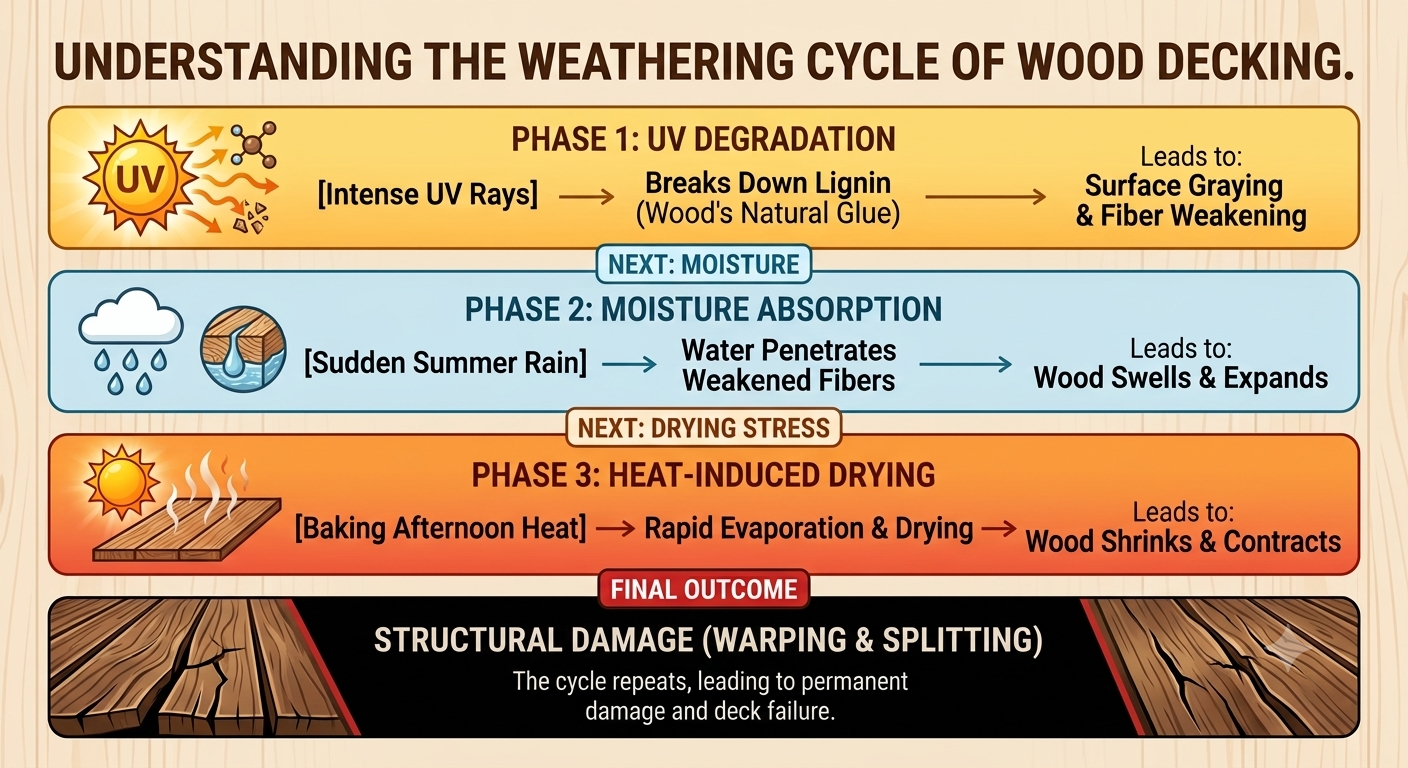
Once the surface fibers are weakened by UV exposure, the wood becomes highly susceptible to moisture damage. When a sudden summer downpour hits, raw wood absorbs water like a sponge, causing the cellulose fibers to swell and expand. As the sun emerges and bakes the wood, the water evaporates rapidly, forcing the fibers to contract.
This constant cycle of swelling and shrinking puts steady pressure on the wood over time. Over years, this stress manifests as:
- Checking and Splitting: Deep cracks that run along the grain, compromising the physical strength of individual pickets.
- Warping and Cupping: Pickets and rails that twist, pull away from fasteners, and distort the clean, level lines of your boundary.
- Fastener Failure: As the wood warps and shifts, it exerts pressure on nails and screws, backing them out of the posts and causing structural sagging.
The Role of Wood Fiber Protection
While the sun's rays target the wood's natural binders, the structural fibers inside the wood are also highly vulnerable to water damage. When water penetrates deep into the wood grain, it breaks down the natural bonds that hold the wood microfibrils together.
As these fibers degrade, the wood loses its natural elasticity and strength. This breakdown is what causes wood to become brittle and prone to cracking under high winds or physical impact. Without a protective barrier to keep water out, this degradation occurs continuously beneath the surface, long before any visible damage appears on the exterior of the fence.
Why a Professional Fence Company Recommends Staining Over Painting
When looking for ways to protect exterior wood, homeowners often weigh the choice between painting and staining. While paint provides a thick, solid color barrier, professional contractors almost universally recommend high-quality penetrating stains for exterior wood fences.
| Feature | High-Quality Penetrating Stain | Standard Exterior Paint |
|---|---|---|
| Primary Mechanism | Penetrates deep into wood pores to seal fibers internally. | Forms a rigid, non-breathable film on top of the wood surface. |
| Moisture Management | Allows the wood to "breathe," letting internal moisture escape. | Traps moisture beneath the film, leading to wood rot. |
| Failure Mode | Gradually fades over several years without peeling. | Cracks, chips, and peels as the wood naturally expands and contracts. |
| Surface Prep for Re-application | Simple pressure wash and light cleaning. | Labor-intensive scraping, sanding, and stripping of old paint. |
| Aesthetic Appeal | Highlights and preserves the natural beauty of the wood grain. | Completely masks the wood texture under a heavy, artificial layer. |
Because wood naturally expands and contracts with temperature and humidity shifts, a rigid paint film cannot flex with the timber. As the wood moves, the paint cracks. Once water slips through those microscopic cracks, it becomes trapped between the wood and the paint layer. This trapped moisture can lead to hidden rot over time while the paint surface begins to peel.
In contrast, a professional penetrating stain does not form a rigid film. Instead, it saturates the wood pores with protective oils and pigments, leaving the surface breathable while repelling liquid water. When the stain eventually reaches the end of its lifespan, it does not peel or chip; it simply fades gradually, making future maintenance straightforward and cost-effective.
Weatherproofing Wood Fences: The Step-by-Step Professional Process
Achieving a flawless, long-lasting finish requires a meticulous, multi-step application process. Professional wood preservation is highly dependent on proper surface preparation and environmental conditions.
[Step 1: Inspect & Repair] ➔ [Step 2: Clean & Prep] ➔ [Step 3: Dry (Under 12% MC)] ➔ [Step 4: Apply Stain]
1. Structural Inspection and Repair
Before any cleaning begins, the fence must be structurally sound. We inspect the entire run for loose boards, popped nails, or sagging gates. If your fence has suffered structural damage over the years, it is vital to address these issues first.
2. Deep Cleaning and Surface Preparation
Applying stain to dirty, weathered, or damp wood is a recipe for failure. Even a brand-new fence has "mill glaze," which is a slick, compressed surface layer created during the lumber milling process that prevents stain absorption.
- The Solution: Professionals apply a specialized wood cleaner to break down dirt, mold, mildew, and mill glaze.
- The Wash: This is followed by a controlled, low-pressure wash. Using a high-pressure washer on softwoods like pine or cedar can easily gouge the timber, destroy the wood fibers, and leave permanent scarring. Professional technicians use specialized wide-fan tips and precise pressure settings (typically between 500 and 800 PSI) to clean the wood safely.
3. Moisture Testing and Drying
Wood must be completely dry before any oil-based stain can be applied. If stain is applied to damp wood, the water trapped inside the pores will repel the protective oils, preventing proper penetration and causing the finish to blotch or fail prematurely.
- The Standard: We use professional moisture meters to make sure the wood is dry enough (under 12% moisture) to fully drink in the protective stain. This typically requires 24 to 48 hours of dry, sunny weather following the cleaning process.
4. Precision Application
The method of application directly impacts the depth of penetration and the uniformity of the color.
- The Technique: Professionals utilize a combination of airless spraying for deep, even coverage, followed immediately by "back-brushing." Back-brushing is the manual process of working the wet stain into the wood grain with a brush, ensuring that every pore, crack, and joint is fully saturated.
Selecting the Right Wood Fence Stain Colors and Formulations
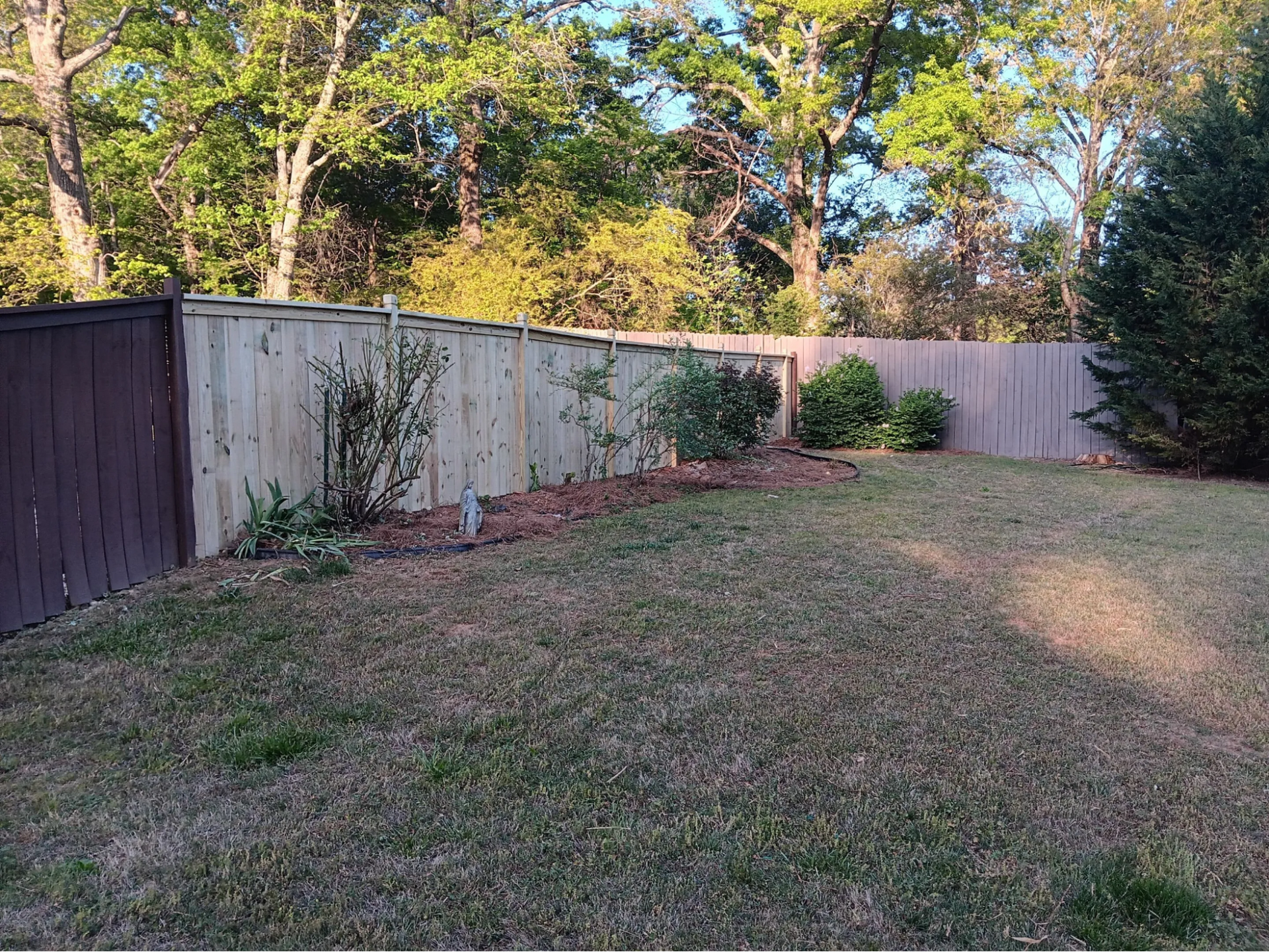
Choosing the right product involves selecting both the correct chemical formulation and the ideal opacity for your property's aesthetic.
Understanding Stain Opacities
- Transparent / Clear Sealers: These contain no pigment and show the exact natural color of the wood. While they prevent water absorption, they offer very little protection against UV rays, meaning the wood will still turn gray within a year.
- Semi-Transparent Stains: These contain a light tint of pigment that colors the wood while allowing the natural grain and texture to show through beautifully. This is the most popular choice for premium lumber, as the pigments provide excellent UV protection while celebrating the wood's organic beauty.
- Semi-Solid Stains: These feature a heavier concentration of pigment, masking most of the wood grain while still showing the natural texture. They offer superior UV protection and are ideal for older fences that have minor cosmetic imperfections.
- Solid Stains: These look similar to paint, completely masking the wood grain with a rich, solid color. They provide the highest level of UV protection but do not penetrate as deeply as semi-transparent options.
Professional-Grade vs. Retail Formulations
The products available at local big-box home improvement stores are typically water-based acrylics designed for easy cleanup. However, these retail products often dry too quickly, forming a thin film on the surface rather than penetrating deep into the wood.
Professionals utilize commercial-grade, high-solids oil-based stains. These formulas dry slowly, allowing the protective oils and trans-oxide pigments to sink deep into the cellular structure of the timber, providing a much more durable and uniform barrier against the elements.
Paraffinic vs. Asphaltic Oil Chemistry
Within professional-grade oil-based stains, the type of oil base used plays a critical role in performance. High-end stains utilize paraffinic oils, which are highly refined, clear oils that penetrate deep into the wood fibers without leaving a sticky residue. Paraffinic oils are highly resistant to mold and mildew because they do not contain the organic nutrients that fungi feed on.
In contrast, cheaper retail oil stains often use linseed oil bases. Linseed oil is an organic vegetable oil that, while natural, actually serves as a food source for mold and mildew spores in humid climates like North Georgia. This is why cheap oil stains often turn black with mold within a year of application, whereas professional paraffinic formulas remain clean and bright.
How Often to Stain Wood Fence Installations to Prevent Rot and Warping
Proper timing is the key to maximizing the lifespan of your exterior wood. Staining too early, too late, or too frequently can all lead to performance issues.
The Initial Application
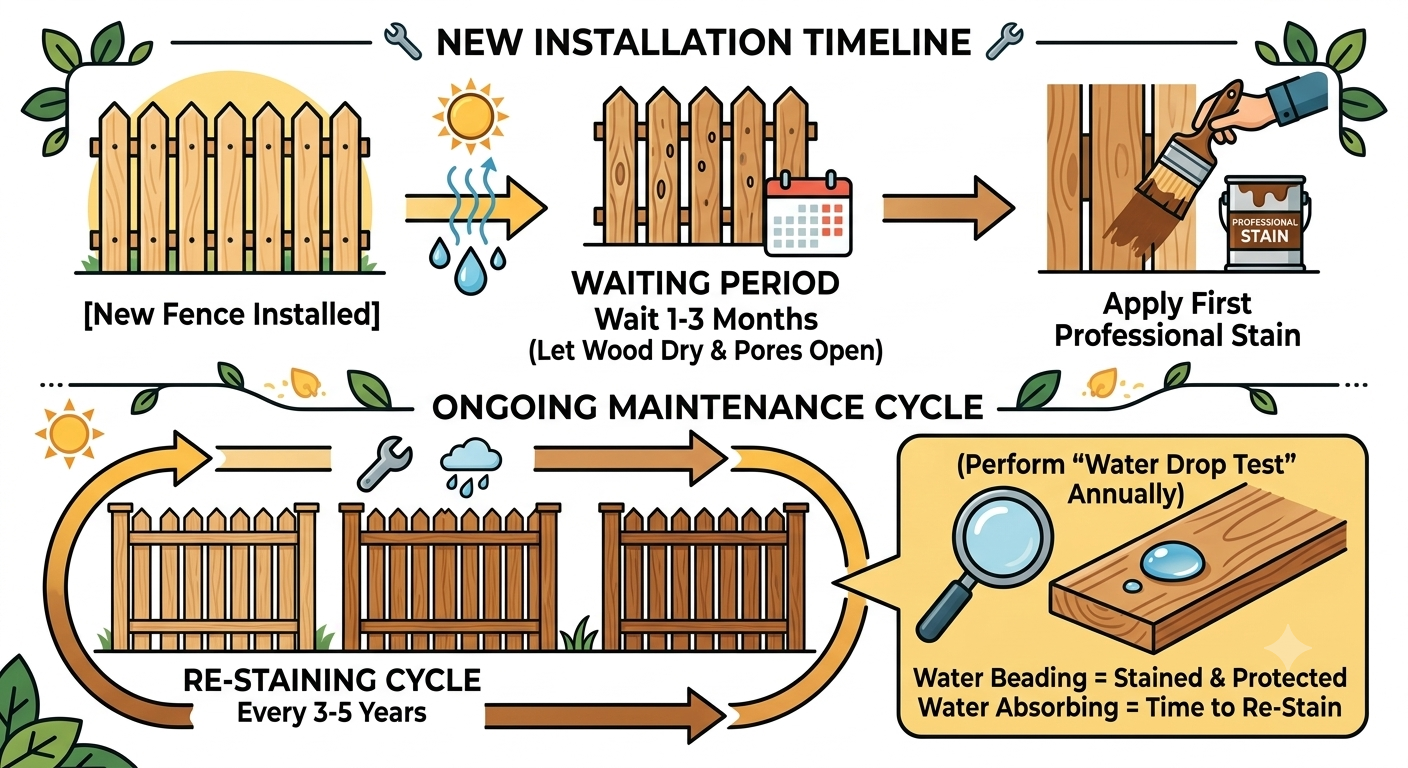
If you have just installed a new wood fence, you should not stain it immediately. Fresh pressure-treated lumber is saturated with water and chemical preservatives from the treatment process.
- The Waiting Period: You must allow the wood to "cure" and dry out. Depending on the season and sun exposure, this typically takes between 1 to 3 months.
- The Test: To check if your wood is ready, perform the "water drop test." Sprinkle a few drops of water onto the wood surface. If the water beads up and sits on top, the wood is still too wet. If the water quickly sinks into the grain, the pores are open and ready to absorb stain.
Ongoing Maintenance Schedule
For maximum protection, a wood fence should be professionally cleaned and re-stained every 3 to 5 years. The exact frequency depends on:
- Sun Exposure: South and west-facing sections of your fence receive the most intense UV radiation and will require maintenance sooner than shaded sections.
- Vegetation: Fences bordered by heavy shrubs, trees, or climbing vines retain moisture longer and are more prone to mold and mildew, requiring more frequent cleaning and sealing.
Troubleshooting Common Staining Failures
When wood staining is performed by inexperienced crews or DIYers, several common application errors can occur, leading to premature failure of the protective barrier.
1. Lap Marks and Shiners
Lap marks occur when wet stain is applied over an area that has already begun to dry. This creates a double layer of pigment, resulting in dark, unsightly streaks across the fence panels. "Shiners" are shiny, glossy spots that appear when too much stain is applied, and the excess oil dries on the surface of the wood rather than penetrating.
- The Professional Fix: Professionals prevent lap marks by staining one complete board from top to bottom without stopping, and they eliminate shiners by back-rolling or wiping away excess wet stain before it can dry.
2. Peeling and Flaking
If a wood stain begins to peel or flake off like paint, it is a sign that a film-forming water-based product was applied over dirty, damp, or previously sealed wood. Penetrating stains cannot bond to wood fibers if the pores are already blocked by old sealer or moisture.
- The Professional Fix: To correct this, the old film must be completely stripped away using specialized wood strippers and low-pressure washing before a true penetrating oil-based stain can be applied.
Protect Your Investment with Down to Earth Fence
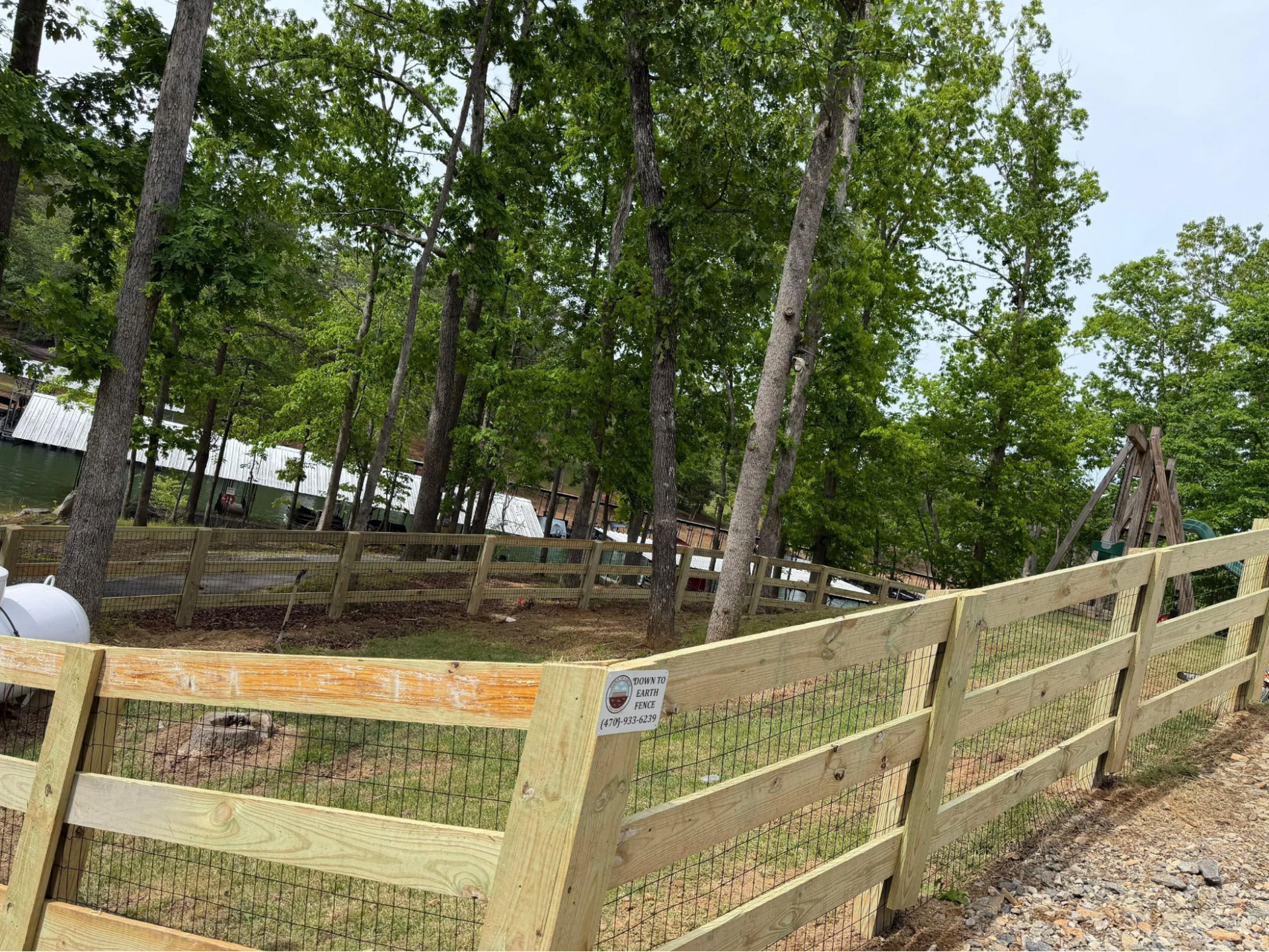
Your home's exterior boundaries represent a significant financial investment and a key component of your property's security and curb appeal. While our award-winning team at Down to Earth Fence constructs every perimeter to the absolute highest structural standards, preserving the pristine, natural beauty of organic timber requires a dedicated maintenance strategy.
By partnering with a professional team for your wood preservation needs, you ensure that your fence receives the commercial-grade products, meticulous surface preparation, and expert application required to withstand North Georgia's challenging climate. Don't wait for the summer sun and humidity to take a toll on your timber. Take the first step toward long-term property protection today. If you are located in Forsyth County, you can learn more about our local service offerings on
Down to Earth Fence's dedicated Cumming service page or contact our team directly to schedule a comprehensive maintenance consultation.
- Get in Touch: Request a free fence estimate online or call our local office to speak with a friendly representative about your project.
- See Our Work: Visit our Google Business Profile to view photos of our recent local installations, read reviews from your neighbors, and see our award-winning craftsmanship in action.